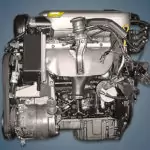
Opel X16XEL
The main problem is valve stem seals slipping off the valve guides.
The Opel Zafira is a compact MPV from General Motors. Produced since 1999. The third generation of the model has been produced since 2011 and is called the Zafira Tourer. Assembly shops for the production of the model are located in Germany, Brazil, Thailand, Indonesia, Poland and Russia. The 3rd-generation car also has hybrid versions with an electric motor and compressed-gas equipment. In 2016, the car received a facelift, aligning its styling with the Opel Astra K.
The Opel Zafira was offered with 25 engines since 1999 (13 petrol, 12 diesel). Displacement ranges from 1.4 to 2.2 liters, power output from 82 to 200 hp. 9 use a timing chain and 19 a timing belt. 14 are turbocharged. The longest rated lifespan belongs to the Opel A17DTJ (about 350,000 km).
| Engine | Years | Volume | Power | Fuel | Timing | Oil | Lifespan |
|---|---|---|---|---|---|---|---|
| Opel Zafira A (T98) 1999–2010 | |||||||
| Opel X20DTL | 1999–2000 | 2.0 L R4 | 82 hp | diesel, turbo | chain | 5.5 L | ~350,000 km |
| Opel X18XE1 | 1999–2000 | 1.8 L R4 | 116 hp | petrol | belt | 4.25 L | ~320,000 km |
| Opel X16XEL | 1999–2000 | 1.6 L R4 | 100 hp | petrol | belt | 3.5 L | ~275,000 km |
| Opel Z22SE | 2000–2005 | 2.2 L R4 | 147 hp | petrol | chain | 5 L | ~270,000 km |
| Opel Y20DTH | 2000–2005 | 2.0 L R4 | 101 hp | diesel, turbo | chain | 5.5 L | ~320,000 km |
| Opel Z18XE | 2000–2005 | 1.8 L R4 | 125 hp | petrol | belt | 4.25 L | ~300,000 km |
| Opel Z16XE | 2000–2005 | 1.6 L R4 | 101 hp | petrol | belt | 3.5 L | ~320,000 km |
| Opel Y22DTR | 2001–2005 | 2.2 L R4 | 120–125 hp | diesel, turbo | chain | 5.5 L | ~350,000 km |
| Opel Z20LET | 2001–2004 | 2.0 L R4 | 190–200 hp | petrol, turbo | belt | 4.25 L | ~250,000 km |
| Opel Z18XER | 2005–2010 | 1.8 L R4 | 140 hp | petrol | belt | 4.5 L | ~350,000 km |
| Opel Zafira B (A05) 2005–2014 | |||||||
| Opel Z22YH | 2005–2010 | 2.2 L R4 | 150–155 hp | petrol | chain | 5 L | ~250,000 km |
| Opel Z19DTH | 2005–2010 | 1.9 L R4 | 150 hp | diesel, turbo | belt | 4.5 L | ~300,000 km |
| Opel Z19DT | 2005–2010 | 1.9 L R4 | 120 hp | diesel, turbo | belt | 4.6 L | ~340,000 km |
| Opel Z16XEP | 2005–2007 | 1.6 L R4 | 105 hp | petrol | belt | 4.5 L | ~300,000 km |
| Opel Z16XER | 2008–2010 | 1.6 L R4 | 115 hp | petrol | belt | 4.5 L | ~350,000 km |
| Opel A17DTR | 2009–2010 | 1.7 L R4 | 125 hp | diesel, turbo | belt | 5.4 L | ~340,000 km |
| Opel A17DTJ | 2009–2011 | 1.7 L R4 | 110 hp | diesel, turbo | belt | 5.4 L | ~350,000 km |
| Opel A16XER | 2010–2011 | 1.6 L R4 | 115 hp | petrol | belt | 4.5 L | ~300,000 km |
| Opel A18XER | 2010–2014 | 1.8 L R4 | 140 hp | petrol | belt | 4.45 L | ~320,000 km |
| Opel Zafira C (P12) 2011–present | |||||||
| Opel A14NET/NEL | 2011–present | 1.4 L R4 | 140 hp | petrol, turbo | chain | 4 L | ~300,000 km |
| Opel A20DTH | 2011–2014 | 2.0 L R4 | 160–170 hp | diesel, turbo | belt | 4.5 L | ~250,000 km |
| Opel Zafira D (K0) 2019–present | |||||||
| Peugeot DV5RD | 2019–present | 1.5 L R4 | 100–102 hp | diesel, turbo | chain + belt | 4 L | ~290,000 km |
| Peugeot DV5TED4 | 2019–present | 1.5 L R4 | 120 hp | diesel, turbo | belt | 3.75 L | ~270,000 km |
| Peugeot DV5RUC | 2019–2021 | 1.5 L R4 | 120 hp | diesel, turbo | chain + belt | 4 L | ~300,000 km |
| Peugeot DV5RUCD | 2019–2020 | 1.5 L R4 | 102 hp | diesel, turbo | chain + belt | 4 L | ~300,000 km |
Opel Zafira A (T98) (1999–2010): Opel X20DTL, Opel X18XE1, Opel X16XEL, Opel Z22SE, Opel Y20DTH, Opel Z18XE, Opel Z16XE, Opel Y22DTR, Opel Z20LET and Opel Z18XER; Opel Zafira B (A05) (2005–2014): Opel Z22YH, Opel Z19DTH, Opel Z19DT, Opel Z16XEP, Opel Z16XER, Opel A17DTR, Opel A17DTJ, Opel A16XER and Opel A18XER; Opel Zafira C (P12) (2011–present): Opel A14NET/NEL and Opel A20DTH; Opel Zafira D (K0) (2019–present): Peugeot DV5RD, Peugeot DV5TED4, Peugeot DV5RUC and Peugeot DV5RUCD.
By rated service life the most durable Opel Zafira engines are: Opel A17DTJ — about 350,000 km; Opel X20DTL — about 350,000 km; Opel Y22DTR — about 350,000 km. Actual lifespan depends heavily on maintenance and oil change intervals.
Engine oil capacity with filter: Opel A14NET/NEL — 4 L (5W-30); Opel A16XER — 4.5 L (5W-30); Opel A17DTJ — 5.4 L (5W-30); Opel A17DTR — 5.4 L (5W-30); Opel A18XER — 4.45 L (5W-30); Opel A20DTH — 4.5 L (5W-30); Opel X16XEL — 3.5 L (5W-30); Opel X18XE1 — 4.25 L (5W-30); Opel X20DTL — 5.5 L (5W-40); Opel Y20DTH — 5.5 L (5W-40); Opel Y22DTR — 5.5 L (5W-40); Opel Z16XE — 3.5 L (5W-30); Opel Z16XEP — 4.5 L (5W-30); Opel Z16XER — 4.5 L (5W-30); Opel Z18XE — 4.25 L (5W-30); Opel Z18XER — 4.5 L (5W-30 / 5W-40 / 0W-30 / 0W-40); Opel Z19DT — 4.6 L (5W-40); Opel Z19DTH — 4.5 L (5W-40); Opel Z20LET — 4.25 L (5W-30); Opel Z22SE — 5 L (5W-30); Opel Z22YH — 5 L (5.0 liters 5W-30, 5W-40); Peugeot DV5RD — 4 L (5W-30); Peugeot DV5RUC — 4 L (0W-30); Peugeot DV5RUCD — 4 L (0W-30); Peugeot DV5TED4 — 3.75 L (5W-30).
Timing chain: Opel A14NET/NEL, Opel X20DTL, Opel Y20DTH, Opel Y22DTR, Opel Z22SE, Opel Z22YH, Peugeot DV5RD, Peugeot DV5RUC and Peugeot DV5RUCD; timing belt: Opel A16XER, Opel A17DTJ, Opel A17DTR, Opel A18XER, Opel A20DTH, Opel X16XEL, Opel X18XE1, Opel Z16XE, Opel Z16XEP, Opel Z16XER, Opel Z18XE, Opel Z18XER, Opel Z19DT, Opel Z19DTH, Opel Z20LET, Peugeot DV5RD, Peugeot DV5RUC, Peugeot DV5RUCD and Peugeot DV5TED4. Belts must be replaced on schedule: on many engines a broken belt bends the valves.
Yes: Opel A17DTJ, Opel A17DTR, Opel A20DTH, Opel X20DTL, Opel Y20DTH, Opel Y22DTR, Opel Z19DT, Opel Z19DTH, Peugeot DV5RD, Peugeot DV5RUC, Peugeot DV5RUCD and Peugeot DV5TED4.
The main problem is valve stem seals slipping off the valve guides.

Most engine problems are related to the Bosch VP44 injection pump.
Many engine problems are caused by ECU glitches; it is easier to replace the unit than to repair it.

The main engine problems are largely related to failures of the Bosch VP44 injection pump.

Owners of an Opel with this engine spend their lives fighting air in the fuel system.

Most often, owners complain about high oil consumption, and decarbonization does not always help.

The engine is known for its reliability, but it has one weak point: an unreliable ECU.

The crankshaft and camshaft seals are considered the engine's weak point and often need replacing.

The timing chain, or rather its tensioner, causes the most trouble for owners.

Drivers constantly complain about loss of power caused by Twinport system faults.

This is a simple and reliable engine, as it does not have problematic swirl flaps.

The weak point of this unit is the intake manifold swirl flaps.

In the engines of the first years of production, there was a widespread defect in the camshafts and cam phasers, but they…

Early engines in this line had defective cam phasers, which were replaced under warranty long ago; current problems are mainly caused by…

The most common issue is ignition failure, with the coil pack being the main weak point.

The ignition system causes the most problems, especially the coil pack.

Engines produced up to 2013 often seized when driving at high speeds.
Engines of this series are known for clicking and whistling noises during operation, which is considered normal.
The use of low-quality coolant quickly takes a toll on engine condition.

Above all, this diesel engine is sensitive to poor-quality coolant.

This diesel engine is relatively new, so malfunction statistics are not yet available.

Diesels of this series are known for the chain between the camshafts stretching at about 150,000 km; if it breaks, a major…

Diesels of this series are known for stretching of the chain between the camshafts at about 150,000 km; if it breaks, a…
The engine has only recently entered service, so there is no reliability data available yet.

The most complete catalog of car and truck engines: specifications, oil capacity, timing drive, typical problems and lifespan.
We use cookies for website statistics (Yandex Metrica) and advertising (Google AdSense). Details are in our privacy policy.