
Mercedes OM601
These diesels are very reliable, provided good-quality fuel and oil are used.
Mercedes-Benz C-Class is a series of German compact executive cars produced by Mercedes-Benz since 1995. The 4th generation of the model has been produced since 2014. The main car production is located in the German cities of Bremen and Sindelfingen. The car is also assembled in the United States and at affiliated plants in other countries. Until 1997, the C-Class was the smallest model in the manufacturer’s lineup. The 1st generation is essentially a refined version of the previously produced Mercedes-Benz W201 (190).
The Mercedes-Benz C-Class was offered with 33 engines since 1993 (23 petrol, 10 diesel). Displacement ranges from 1.5 to 6.2 liters, power output from 72 to 639 hp. All of them use a timing chain. 17 are turbocharged. The longest rated lifespan belongs to the Mercedes M104 E28 (about 500,000 km).
| Engine | Years | Volume | Power | Fuel | Timing | Oil | Lifespan |
|---|---|---|---|---|---|---|---|
| Mercedes-Benz C-Class W202 1993–2001 | |||||||
| Mercedes OM604 | 1993–1999 | 2.0–2.2 L R4 | 88–95 hp | diesel | chain | 6.5 L | ~450,000 km |
| Mercedes OM605 | 1993–2001 | 2.5 L R5 | 113–150 hp | diesel, NA / turbo | chain | 6.5 L | ~400,000 km |
| Mercedes M111 E20 | 1993–2001 | 2.0 L R4 | 136–192 hp | petrol | chain | 5.5 L | ~420,000 km |
| Mercedes M111 E18 | 1993–2000 | 1.8 L R4 | 122 hp | petrol | chain | 5.5 L | ~400,000 km |
| Mercedes M104 E28 | 1993–1997 | 2.8 L R6 | 193–197 hp | petrol | chain | 7 L | ~500,000 km |
| Mercedes M111 E22 | 1993–1996 | 2.2 L R4 | 150 hp | petrol | chain | 5.5 L | ~430,000 km |
| Mercedes M111 E23 | 1996–2000 | 2.3 L R4 | 143–193 hp | petrol | chain | 5.5 L | ~450,000 km |
| Mercedes M112 E28 | 1996–2000 | 2.8 L V6 | 197–204 hp | petrol | chain | 7.5 L | ~330,000 km |
| Mercedes M112 E24 | 1996–2000 | 2.4 L V6 | 170 hp | petrol | chain | 7.5 L | ~275,000 km |
| Mercedes M113 E43 | 1997–2001 | 4.3 L V8 | 272–306 hp | petrol | chain | 8 L | ~300,000 km |
| Mercedes OM611 | 1997–2001 | 2.1–2.2 L R4 | 82–143 hp | diesel, turbo | chain | 6.5–8.5 L | ~500,000 km |
| Mercedes M112 E26 | 2000–2001 | 2.6 L V6 | 170–177 hp | petrol | chain | 7.5 L | ~300,000 km |
| Mercedes-Benz C-Class W203 2000–2007 | |||||||
| Mercedes M112 E32 | 2000–2005 | 3.2 L V6 | 190–354 hp | petrol | chain | 7.5 L | ~350,000 km |
| Mercedes OM612 | 2000–2007 | 2.7 L R5 | 156–170 hp | diesel, turbo | chain | 7.5 L | ~350,000 km |
| Mercedes OM646 | 2003–2007 | 2.1 L R4 | 88–170 hp | diesel, turbo | chain | 6.5–9.5 L | ~400,000 km |
| Mercedes M272 E30 | 2005–2007 | 3.0 L V6 | 231 hp | petrol | chain | 8 L | ~300,000 km |
| Mercedes OM642 | 2005–2007 | 3.0 L V6 | 184–265 hp | diesel, turbo | chain | 8–12 L | ~450,000 km |
| Mercedes-Benz C-Class CL203 2002–2011 | |||||||
| Mercedes M271 E18 | 2002–2008 | 1.8 L R4 | 122–204 hp | petrol, turbo | chain | 5.5 L | ~320,000 km |
| Mercedes M271 E16 | 2004–2006 | 1.6 L R4 | 129–156 hp | petrol, turbo | chain | 5.5 L | ~300,000 km |
| Mercedes M272 E25 | 2004–2011 | 2.5 L V6 | 204 hp | petrol | chain | 8 L | ~275,000 km |
| Mercedes M272 E35 | 2005–2011 | 3.5 L V6 | 258–292 hp | petrol | chain | 8 L | ~320,000 km |
| Mercedes-Benz C-Class W204 2007–2015 | |||||||
| Mercedes M156 | 2007–2015 | 6.2 L V8 | 457–525 hp | petrol | chain | 9 L | ~250,000 km |
| Mercedes OM651 | 2008–2015 | 1.8–2.1 L R4 | 95–204 hp | diesel | chain + gears | 6.5 L | ~400,000 km |
| Mercedes M276 DE35 | 2011–2014 | 3.5 L V6 | 252–333 hp | petrol, NA / turbo | chain | 8 L | ~300,000 km |
| Mercedes M274 | 2012–2015 | 1.6–2.0 L R4 | 129–333 hp | petrol, turbo | chain | 6–7 L | ~300,000 km |
| Mercedes-Benz C-Class W205 2014–2023 | |||||||
| Mercedes OM626 | 2014–2018 | 1.6 L R4 | 115–136 hp | diesel, turbo | chain | 5.9 L | |
| Mercedes M276 DE30 | 2015–2021 | 3.0 L V6 | 272–367 hp | petrol, turbo | chain | 8 L | ~250,000 km |
| Mercedes M177 | 2015–2023 | 4.0 L V8 | 476–639 hp | petrol, turbo | chain | 9 L | ~250,000 km |
| Mercedes OM654 | 2018–2021 | 1.6–2.0 L R4 | 116–265 hp | diesel, turbo | chain | 6.5 L | ~240,000 km |
| Mercedes M264 | 2018–2021 | 1.5–2.0 L R4 | 156–299 hp | petrol, turbo | chain | 6.6 L | ~260,000 km |
| Mercedes-Benz C-Class W206 2021–present | |||||||
| Mercedes M254 | 2021–present | 1.5–2.0 L R4 | 170–258 hp | petrol, turbo | chain | 6.6 L | ~260,000 km |
| Mercedes M139 | 2022–present | 2.0 L R4 | 365–476 hp | petrol, turbo | chain | 5.5 L | ~250,000 km |
| Other Mercedes-Benz C-Class engines generation not specified | |||||||
| Mercedes OM601 | 1983–2000 | 2.0–2.3 L R4 | 72–98 hp | diesel, NA / turbo | chain | 6 L | ~500,000 km |
Mercedes-Benz C-Class W202 (1993–2001): Mercedes OM604, Mercedes OM605, Mercedes M111 E20, Mercedes M111 E18, Mercedes M104 E28, Mercedes M111 E22, Mercedes M111 E23, Mercedes M112 E28, Mercedes M112 E24, Mercedes M113 E43, Mercedes OM611 and Mercedes M112 E26; Mercedes-Benz C-Class W203 (2000–2007): Mercedes M112 E32, Mercedes OM612, Mercedes OM646, Mercedes M272 E30 and Mercedes OM642; Mercedes-Benz C-Class CL203 (2002–2011): Mercedes M271 E18, Mercedes M271 E16, Mercedes M272 E25 and Mercedes M272 E35; Mercedes-Benz C-Class W204 (2007–2015): Mercedes M156, Mercedes OM651, Mercedes M276 DE35 and Mercedes M274; Mercedes-Benz C-Class W205 (2014–2023): Mercedes OM626, Mercedes M276 DE30, Mercedes M177, Mercedes OM654 and Mercedes M264; Mercedes-Benz C-Class W206 (2021–present): Mercedes M254 and Mercedes M139.
By rated service life the most durable Mercedes-Benz C-Class engines are: Mercedes M104 E28 — about 500,000 km; Mercedes OM601 — about 500,000 km; Mercedes OM611 — about 500,000 km. Actual lifespan depends heavily on maintenance and oil change intervals.
Engine oil capacity with filter: Mercedes M104 E28 — 7 L (5W-40); Mercedes M111 E18 — 5.5 L (5W-40); Mercedes M111 E20 — 5.5 L (5W-40); Mercedes M111 E22 — 5.5 L (5W-40); Mercedes M111 E23 — 5.5 L (5W-40); Mercedes M112 E24 — 7.5 L (5W-30); Mercedes M112 E26 — 7.5 L (5W-30); Mercedes M112 E28 — 7.5 L (5W-30); Mercedes M112 E32 — 7.5 L (5W-30); Mercedes M113 E43 — 8 L (5W-40); Mercedes M139 — 5.5 L (0W-40); Mercedes M156 — 9 L (0W-40); Mercedes M177 — 9 L (0W-40); Mercedes M254 — 6.6 L (5W-30); Mercedes M264 — 6.6 L (5W-30); Mercedes M271 E16 — 5.5 L (5W-30); Mercedes M271 E18 — 5.5 L (5W-30); Mercedes M272 E25 — 8 L (5W-30); Mercedes M272 E30 — 8 L (5W-30); Mercedes M272 E35 — 8 L (5W-30); Mercedes M274 — 6–7 L (5W-30, 5W-40); Mercedes M276 DE30 — 8 L (5W-30); Mercedes M276 DE35 — 8 L (5W-30); Mercedes OM601 — 6 L (5W-40); Mercedes OM604 — 6.5 L (5W-40); Mercedes OM605 — 6.5 L (5W-40); Mercedes OM611 — 6.5–8.5 L (5W-40, MB 229.1); Mercedes OM612 — 7.5 L (5W-30); Mercedes OM626 — 5.9 L (5W-30); Mercedes OM642 — 8–12 L (5W-30, MB 228.51/229.51); Mercedes OM646 — 6.5–9.5 L (5W-40, MB 229.5 / 229.51); Mercedes OM651 — 6.5 L (5W-30); Mercedes OM654 — 6.5 L (5W-30).
Timing chain: Mercedes M104 E28, Mercedes M111 E18, Mercedes M111 E20, Mercedes M111 E22, Mercedes M111 E23, Mercedes M112 E24, Mercedes M112 E26, Mercedes M112 E28, Mercedes M112 E32, Mercedes M113 E43, Mercedes M139, Mercedes M156, Mercedes M177, Mercedes M254, Mercedes M264, Mercedes M271 E16, Mercedes M271 E18, Mercedes M272 E25, Mercedes M272 E30, Mercedes M272 E35, Mercedes M274, Mercedes M276 DE30, Mercedes M276 DE35, Mercedes OM601, Mercedes OM604, Mercedes OM605, Mercedes OM611, Mercedes OM612, Mercedes OM626, Mercedes OM642, Mercedes OM646, Mercedes OM651 and Mercedes OM654; gear drive: Mercedes OM651.
Yes: Mercedes OM601, Mercedes OM604, Mercedes OM605, Mercedes OM611, Mercedes OM612, Mercedes OM626, Mercedes OM642, Mercedes OM646, Mercedes OM651 and Mercedes OM654.
These diesels are very reliable, provided good-quality fuel and oil are used.
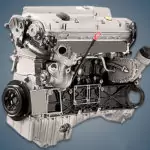
The main problem with this engine family is numerous oil leaks.

The main headache is oil leaks, and they multiply with mileage.
Oil leaks cause the most problems, and their number increases with mileage.
Oil leaks cause the most problems, and their number increases with mileage.

Mechanically, these engines are very reliable and last about 400,000–500,000 km.

Strong vibration shortens the life of the engine mounts.
Oil leaks cause the most trouble, and their frequency increases with mileage.
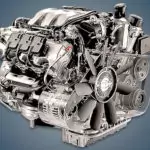
The signature failure of this engine series is the destruction of the crankshaft pulley.
A characteristic problem of this engine series is the failure of the crankshaft pulley.
The signature failure of this engine series is the crankshaft pulley breaking up.

The main problem of the engines of this family is very high oil consumption.

The best-known problem of this engine is burnt-out sealing washers under the injectors. It is advisable to replace them every 60,000 km,…

A typical problem of the five-cylinder diesels of this series is accelerated camshaft wear.
A signature failure of this engine series is the destruction of the crankshaft pulley.

The best-known problem of this engine is exhaust valves sticking due to carbon deposits.

The engine has a reliable Bosch fuel system with solenoid injectors, but leaks at the high-pressure pump seals and wear of the…

The weakest point of this engine is its timing drive.
The weakest point of this engine is its timing drive.
The weakest point of this engine is its timing drive.

The best-known problem of this diesel is leaking oil cooler gaskets; since the cooler sits in the V of the block, replacing…
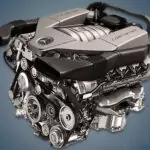
The best-known problem of these engines is short camshaft life.

The best-known problem is exhaust valves sticking due to carbon deposits.

Until 2011, the main versions had a Delphi fuel system with piezo injectors that tended to leak, often causing hydrolock and burnt…

The main weak point of this engine is the timing chain tensioners.
The biggest weak point of this engine is the timing chain tensioners.

On engines built before 2014, the cam phasers started rattling quite early; the manufacturer then revised the design, and their life increased…

The engine is a version of the Renault R9M, whose timing chain can stretch by 150,000 km.
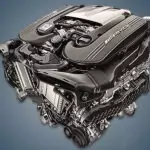
First of all, this engine does not take well to tuning: its connecting rods cannot cope.

A well-known weak point of this diesel is short-lived rocker arms.

There have already been cases of pistons damaged by knocking caused by low-octane fuel.

For this level of boost, this is a perfectly reliable turbo engine with no problems.

All engines of this modular family are sensitive to knocking, so do not use low-octane fuel.
The most complete catalog of car and truck engines: specifications, oil capacity, timing drive, typical problems and lifespan.
We use cookies for website statistics (Yandex Metrica) and advertising (Google AdSense). Details are in our privacy policy.