
Hyundai-Kia G4JP
This engine is very demanding regarding oil quality and especially oil change intervals. Skimping on lubrication often causes the balance shaft bearings…
The Hyundai Santa Fe is a compact crossover produced by Hyundai. It has been manufactured since 2000. Since 2007, it has also been produced as a mid-size crossover. The vehicle is named after the city of Santa Fe in New Mexico, USA. Since 2012, the third generation of the model has been produced in two versions: the five-seat Sport and the seven-seat SUV. Assembly plants are located in South Korea, the United States, and Russia (Kaliningrad).
The Hyundai Santa Fe was offered with 20 engines since 2000 (5 diesel, 15 petrol). Displacement ranges from 1.6 to 3.5 liters, power output from 112 to 350 hp. 14 use a timing chain and 8 a timing belt. 8 are turbocharged. The longest rated lifespan belongs to the Hyundai-Kia G4JS (about 500,000 km).
| Engine | Years | Volume | Power | Fuel | Timing | Oil | Lifespan |
|---|---|---|---|---|---|---|---|
| Hyundai Santa Fe 1 (SM) 2000–2012 | |||||||
| Hyundai-Kia G4JS | 2000–2006 | 2.4 L R4 | 140–150 hp | petrol | belt | 4.5 L | ~500,000 km |
| Hyundai-Kia G4JP | 2000–2006 | 2.0 L R4 | 130–140 hp | petrol | belt | 4.5 L | ~450,000 km |
| Hyundai-Kia G6BA | 2000–2012 | 2.7 L V6 | 165–182 hp | petrol | chain + belt | 5.5 L | ~400,000 km |
| Hyundai-Kia D4EA | 2001–2012 | 2.0 L R4 | 112–150 hp | diesel, turbo | belt | 6.5 L | ~400,000 km |
| Hyundai-Kia G6CU | 2003–2006 | 3.5 L V6 | 195–220 hp | petrol | belt | 5.5 L | ~350,000 km |
| Hyundai Santa Fe 2 (CM) 2005–2012 | |||||||
| Hyundai D4EB | 2005–2010 | 2.2 L R4 | 150–155 hp | diesel, turbo | belt | 6.5 L | ~400,000 km |
| Hyundai-Kia G6EA | 2005–2010 | 2.7 L V6 | 185–200 hp | petrol | chain + belt | 5.5 L | ~350,000 km |
| Hyundai-Kia G6DB | 2005–2009 | 3.3 L V6 | 233–259 hp | petrol | chain | 6 L | ~300,000 km |
| Hyundai-Kia D4HB | 2009–2012 | 2.2 L R4 | 150–200 hp | diesel, turbo | chain | 7.4–7.8 L | ~450,000 km |
| Hyundai-Kia D4HA | 2009–2012 | 2.0 L R4 | 136–184 hp | diesel, turbo | chain | 8.8 L | ~400,000 km |
| Hyundai-Kia G4KE | 2009–2012 | 2.4 L R4 | 170–180 hp | petrol | chain | 5.2 L | ~300,000 km |
| Hyundai-Kia G6DC | 2009–2012 | 3.5 L V6 | 250–290 hp | petrol | chain | 5.7 L | ~350,000 km |
| Hyundai Santa Fe 3 (DM) 2012–2018 | |||||||
| Hyundai-Kia G4KJ | 2012–2018 | 2.4 L R4 | 180–201 hp | petrol | chain | 5.8 L | ~300,000 km |
| Hyundai-Kia G4KH | 2012–2018 | 2.0 L R4 | 240–280 hp | petrol, turbo | chain | 6.1 L | ~200,000 km |
| Hyundai-Kia G6DH | 2012–2018 | 3.3 L V6 | 282–300 hp | petrol | chain | 6.5 L | ~300,000 km |
| Hyundai-Kia G6DF | 2012–2018 | 3.3 L V6 | 270 hp | petrol | chain | 6.5 L | ~350,000 km |
| Hyundai Santa Fe 4 (TM) 2020–present | |||||||
| Hyundai-Kia D4HE | 2020–present | 2.2 L R4 | 202 hp | diesel, turbo | belt | 5.6 L | ~350,000 km |
| Hyundai-Kia G4KP | 2020–present | 2.5 L R4 | 280–294 hp | petrol, turbo | chain | 6.2 L | ~200,000 km |
| Hyundai-Kia G6DU | 2020–present | 3.5 L V6 | 250–272 hp | petrol | chain | 6.1 L | ~300,000 km |
| Hyundai-Kia G4FT | 2020–present | 1.6 L R4 | 180–350 hp | petrol, turbo | chain | 4.8 L | ~250,000 km |
Hyundai Santa Fe 1 (SM) (2000–2012): Hyundai-Kia G4JS, Hyundai-Kia G4JP, Hyundai-Kia G6BA, Hyundai-Kia D4EA and Hyundai-Kia G6CU; Hyundai Santa Fe 2 (CM) (2005–2012): Hyundai D4EB, Hyundai-Kia G6EA, Hyundai-Kia G6DB, Hyundai-Kia D4HB, Hyundai-Kia D4HA, Hyundai-Kia G4KE and Hyundai-Kia G6DC; Hyundai Santa Fe 3 (DM) (2012–2018): Hyundai-Kia G4KJ, Hyundai-Kia G4KH, Hyundai-Kia G6DH and Hyundai-Kia G6DF; Hyundai Santa Fe 4 (TM) (2020–present): Hyundai-Kia D4HE, Hyundai-Kia G4KP, Hyundai-Kia G6DU and Hyundai-Kia G4FT.
By rated service life the most durable Hyundai Santa Fe engines are: Hyundai-Kia G4JS — about 500,000 km; Hyundai-Kia D4HB — about 450,000 km; Hyundai-Kia G4JP — about 450,000 km. Actual lifespan depends heavily on maintenance and oil change intervals.
Engine oil capacity with filter: Hyundai D4EB — 6.5 L (5W-30, 5W-40); Hyundai-Kia D4EA — 6.5 L (5W-30, 5W-40); Hyundai-Kia D4HA — 8.8 L (5W-30, 5W-40); Hyundai-Kia D4HB — 7.4–7.8 L (5W-30, 5W-40); Hyundai-Kia D4HE — 5.6 L (5W-30); Hyundai-Kia G4FT — 4.8 L (5W-30); Hyundai-Kia G4JP — 4.5 L (5W-30, 5W-40); Hyundai-Kia G4JS — 4.5 L (5W-30, 5W-40); Hyundai-Kia G4KE — 5.2 L (5W-30, 5W-40); Hyundai-Kia G4KH — 6.1 L (5W-20, 5W-30); Hyundai-Kia G4KJ — 5.8 L (5W-20, 5W-30); Hyundai-Kia G4KP — 6.2 L (0W-30); Hyundai-Kia G6BA — 5.5 L (5W-30, 5W-40); Hyundai-Kia G6CU — 5.5 L (5W-30, 5W-40); Hyundai-Kia G6DB — 6 L (5W-30, 5W-40); Hyundai-Kia G6DC — 5.7 L (5W-30); Hyundai-Kia G6DF — 6.5 L (5W-30); Hyundai-Kia G6DH — 6.5 L (5W-30); Hyundai-Kia G6DU — 6.1 L (5W-30); Hyundai-Kia G6EA — 5.5 L (5W-30, 5W-40).
Timing chain: Hyundai-Kia D4HA, Hyundai-Kia D4HB, Hyundai-Kia G4FT, Hyundai-Kia G4KE, Hyundai-Kia G4KH, Hyundai-Kia G4KJ, Hyundai-Kia G4KP, Hyundai-Kia G6BA, Hyundai-Kia G6DB, Hyundai-Kia G6DC, Hyundai-Kia G6DF, Hyundai-Kia G6DH, Hyundai-Kia G6DU and Hyundai-Kia G6EA; timing belt: Hyundai D4EB, Hyundai-Kia D4EA, Hyundai-Kia D4HE, Hyundai-Kia G4JP, Hyundai-Kia G4JS, Hyundai-Kia G6BA, Hyundai-Kia G6CU and Hyundai-Kia G6EA. Belts must be replaced on schedule: on many engines a broken belt bends the valves.
Yes: Hyundai D4EB, Hyundai-Kia D4EA, Hyundai-Kia D4HA, Hyundai-Kia D4HB and Hyundai-Kia D4HE.
This engine is very demanding regarding oil quality and especially oil change intervals. Skimping on lubrication often causes the balance shaft bearings…

This engine is demanding when it comes to oil quality and especially oil change intervals. Cutting corners here can lead to seized…

This is a very reliable engine with an impressive service life, but it has one notable weak point: the intake manifold contains…

A known weak point of this engine is the intake manifold swirl flaps. They loosen quite quickly, causing intake air leaks, and…

This diesel is demanding on service intervals and oil quality, so owners who skimp on maintenance often face worn camshaft lobes. Along…

The best-known problem with this engine family is progressive oil consumption; the primary cause is relatively rapid wear of the oil-control rings.…

This engine does not tolerate low-quality fuel or lubricants, and requires strict adherence to the maintenance schedule and timely replacement of consumables.…

Mu-series engines are equipped with cam phasers that often require attention. A malfunction usually manifests as noisy engine operation or error codes…
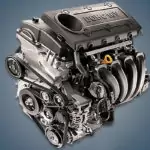
The main complaints about Theta engines concern cylinder scoring caused by catalytic converter fragments getting straight into the combustion chambers. Usually, steadily…

The Bosch CP4 common-rail system with piezo injectors is quite sensitive to fuel quality, and the high-pressure pump fails fairly quickly on…

This diesel has a Bosch common-rail system with a CP4 pump and piezo injectors, which does not tolerate bad diesel: the high-pressure…

The best-known problem of this engine is seizure due to spun bearings, caused by rapid wear of the balance shaft unit combined…

The most common complaint on specialist forums is progressive oil consumption.

These turbo engines are very demanding about oil quality and change intervals; otherwise, the risk of spun bearings at around 100,000 km…
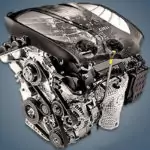
The bulk of complaints on specialist forums are related to oil consumption due to stuck rings.

Most complaints on specialist forums relate to high fuel or oil consumption.

This diesel engine appeared quite recently, so there is little information about breakdowns.

The main problem with hybrids is not reliability, but the lack of service centers or spare parts.

This turbocharged engine is relatively new, so it is too early to judge its reliability.

So far, it has been praised on specialist forums, including for its moderate fuel consumption.
The most complete catalog of car and truck engines: specifications, oil capacity, timing drive, typical problems and lifespan.
We use cookies for website statistics (Yandex Metrica) and advertising (Google AdSense). Details are in our privacy policy.