
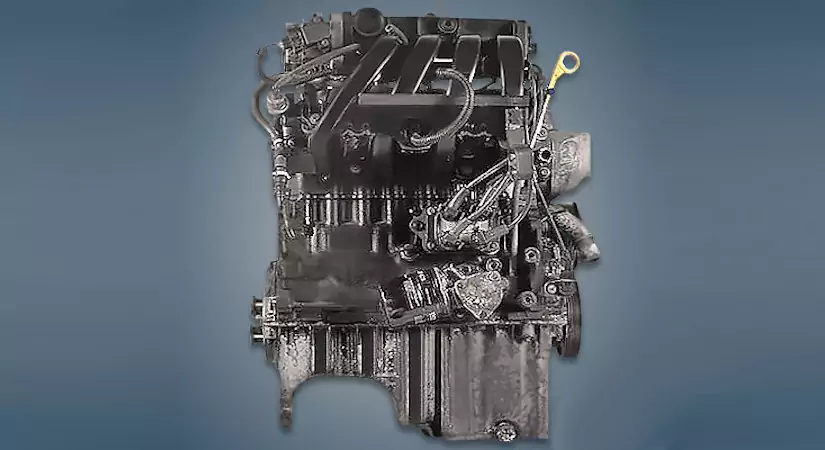
Ford JJA
These motors are famous for their modest resource and often require overhaul by 150,000 km.
The Ford Fiesta is a subcompact car produced by the Ford Motor Company since 1976. Since 2017, the 7th generation of the model has been released. The car was assembled in Spain, Germany, Great Britain, Brazil, South Africa, India, China and some other countries of the world. The name of the car is translated from Spanish as “party”. In the UK, the car became the best-selling car in history. In total, more than 4 million copies of the Fiesta have been sold there.
The Ford Fiesta was offered with 16 engines between 1995 and 2023 (7 diesel, 9 petrol). Displacement ranges from 1.0 to 1.8 liters, power output from 50 to 200 hp. 7 use a timing chain and 11 a timing belt. 10 are turbocharged. The longest rated lifespan belongs to the Ford 1.6 TDCi (about 350,000 km).
| Engine | Years | Volume | Power | Fuel | Timing | Oil | Lifespan |
|---|---|---|---|---|---|---|---|
| Ford Fiesta Mk4 1995–2002 | |||||||
| Ford JJA | 1995–2002 | 1.3 L R4 | 50 hp | petrol | chain | 3.25 L | ~220,000 km |
| Ford RTK/RTJ | 1995–2000 | 1.8 L R4 | 60 hp | diesel | belt | 5 L | ~240,000 km |
| Ford RTP/RTN/RTQ | 1999–2002 | 1.8 L R4 | 75 hp | diesel, turbo | chain + belt | 5.7 L | ~250,000 km |
| Ford Fiesta Mk5 2001–2008 | |||||||
| Ford FXJA/FXJB/FXJC | 2001–2008 | 1.4 L R4 | 80 hp | petrol | belt | 3.8 L | ~250,000 km |
| Ford FYJA | 2001–2008 | 1.6 L R4 | 100 hp | petrol | belt | 4.1 L | ~340,000 km |
| Ford FUJA/FUJB | 2001–2008 | 1.2 L R4 | 70–75 hp | petrol | belt | 3.75 L | ~220,000 km |
| Ford A9JA/A9JB | 2001–2008 | 1.3 L R4 | 70 hp | petrol | chain | 4.15 L | ~300,000 km |
| Ford F6JA/F6JB | 2002–2008 | 1.4 L R4 | 68 hp | diesel, turbo | belt | 3.75 L | ~280,000 km |
| Ford 1.4 TDCi | 2002–2008 | 1.4 L R4 | 68–70 hp | diesel, turbo | belt | 3.75 L | ~300,000 km |
| Ford 1.6 TDCi | 2005–2008 | 1.6 L R4 | 75–109 hp | diesel, turbo | chain + belt | 3.8 L | ~350,000 km |
| Ford Fiesta Mk6 2012–2017 | |||||||
| Ford M1JE | 2012–2017 | 1.0 L R3 | 125 hp | petrol, turbo | belt | 4.6 L | ~230,000 km |
| Ford UGJC | 2012–2017 | 1.5 L R4 | 75 hp | diesel, turbo | belt | 3.85 L | ~250,000 km |
| Ford 1.5 TDCi | 2012–2017 | 1.5 L R4 | 75–120 hp | diesel, turbo | belt | 3.85 L | ~300,000 km |
| Ford Fiesta 7 (B479) 2018–2023 | |||||||
| Ford YZJA | 2018–2023 | 1.5 L R3 | 200 hp | petrol, turbo | chain | 5.25 L | ~250,000 km |
| Ford B7JA | 2020–2023 | 1.0 L R3 | 125 hp | petrol, turbo | chain | 4.6 L | ~250,000 km |
| Ford BZJA | 2020–2023 | 1.0 L R3 | 155 hp | petrol, turbo | chain | 4.6 L | ~250,000 km |
Ford Fiesta Mk4 (1995–2002): Ford JJA, Ford RTK/RTJ and Ford RTP/RTN/RTQ; Ford Fiesta Mk5 (2001–2008): Ford FXJA/FXJB/FXJC, Ford FYJA, Ford FUJA/FUJB, Ford A9JA/A9JB, Ford F6JA/F6JB, Ford 1.4 TDCi and Ford 1.6 TDCi; Ford Fiesta Mk6 (2012–2017): Ford M1JE, Ford UGJC and Ford 1.5 TDCi; Ford Fiesta 7 (B479) (2018–2023): Ford YZJA, Ford B7JA and Ford BZJA.
By rated service life the most durable Ford Fiesta engines are: Ford 1.6 TDCi — about 350,000 km; Ford FYJA — about 340,000 km; Ford 1.4 TDCi — about 300,000 km. Actual lifespan depends heavily on maintenance and oil change intervals.
Engine oil capacity with filter: Ford 1.4 TDCi — 3.75 L (5W-30); Ford 1.5 TDCi — 3.85 L (5W-30); Ford 1.6 TDCi — 3.8 L (5W-30); Ford A9JA/A9JB — 4.15 L (5W-30); Ford B7JA — 4.6 L (5W-20); Ford BZJA — 4.6 L (5W-20); Ford F6JA/F6JB — 3.75 L (5W-30); Ford FUJA/FUJB — 3.75 L (5W-30); Ford FXJA/FXJB/FXJC — 3.8 L (5W-30); Ford FYJA — 4.1 L (5W-30); Ford JJA — 3.25 L (5W-30); Ford M1JE — 4.6 L (5W-20); Ford RTK/RTJ — 5 L (5W-40); Ford RTP/RTN/RTQ — 5.7 L (5W-30); Ford UGJC — 3.85 L (5W-30); Ford YZJA — 5.25 L (5W-20).
Timing chain: Ford 1.6 TDCi, Ford A9JA/A9JB, Ford B7JA, Ford BZJA, Ford JJA, Ford RTP/RTN/RTQ and Ford YZJA; timing belt: Ford 1.4 TDCi, Ford 1.5 TDCi, Ford 1.6 TDCi, Ford F6JA/F6JB, Ford FUJA/FUJB, Ford FXJA/FXJB/FXJC, Ford FYJA, Ford M1JE, Ford RTK/RTJ, Ford RTP/RTN/RTQ and Ford UGJC. Belts must be replaced on schedule: on many engines a broken belt bends the valves.
Yes: Ford 1.4 TDCi, Ford 1.5 TDCi, Ford 1.6 TDCi, Ford F6JA/F6JB, Ford RTK/RTJ, Ford RTP/RTN/RTQ and Ford UGJC.
These motors are famous for their modest resource and often require overhaul by 150,000 km.

The operation of this diesel engine in cold weather is very difficult, sometimes it simply does not start.

This diesel engine is much more reliable than its predecessors and does not cause many problems.

Structurally simple RoCam motors are famous for their reliability and unpretentiousness.

The engine does not tolerate bad fuel, candles and their coils quickly break here.

This engine does not like bad fuel; spark plugs and coils often fail in it.

The power units of this series are quite reliable, but require high-quality gasoline.

The main problems of the owners here are related to the vagaries of the Siemens fuel system: most often the piezo injectors…
The engine is quite demanding on the quality of diesel fuel.

In the early years of the production of this diesel engine, the camshaft cams and the chain tensioner between the camshafts wore…

The most widespread problem of these diesel engines is the breakdown of the turbocharger actuator. Also, the turbine often fails due to…

The most widespread failure is cracked pipes of the cooling system.
The motor is very afraid of low temperatures and during operation in the winter can throw problems.

A reliable engine for its level of tune.

This is a second-generation engine, and the main problems of the first 1.0 EcoBoost no longer apply.

This is a second-generation engine, and the main problems of the first 1.0 EcoBoost no longer apply.