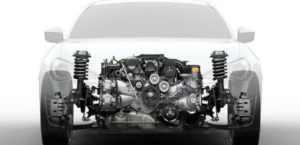

The 2.0-liter Ford TPWA turbo engine or 2.0 EcoBoost 240 was produced from 2010 to 2015 and was installed only on charged versions of the restyled first generation S-MAX minivan. A similar motor with the TPBA index was installed on the fourth generation of the Mondeo model.
The 2.0 EcoBoost line also includes internal combustion engines: TPBA, TNBB and R9DA.
The engine was installed on:
- Ford S-MAX Mk1 in 2010 – 2015.
Specifications
| Production years | 2010-2015 |
| Displacement, cc | 1999 |
| Fuel system | direct injection |
| Power output, hp | 240 |
| Torque output, Nm | 340 |
| Cylinder block | aluminum R4 |
| Block head | aluminum 16v |
| Cylinder bore, mm | 87.5 |
| Piston stroke, mm | 83.1 |
| Compression ratio | 10.0 |
| Features | no |
| Hydraulic lifters | no |
| Timing drive | chain |
| Phase regulator | Ti-VCT |
| Turbocharging | yes |
| Recommended engine oil | 5W-20 |
| Engine oil capacity, liter | 5.5 |
| Fuel type | petrol |
| Euro standards | EURO 5 |
| Fuel consumption, L/100 km (for Ford S-MAX 2012) — city — highway — combined |
11.5 6.5 8.3 |
| Engine lifespan, km | ~250 000 |
Disadvantages of the TPWA engine
- Direct injection system components often fail due to poor fuel;
- In the first years of production, there were cases of destruction of the piston due to detonation;
- The exhaust manifold often bursts, and its fragments can damage the turbine;
- The couplings of the phase regulators go astray after using non-original oil;
- Many owners have experienced oil leaks from the crankshaft rear oil seal.


