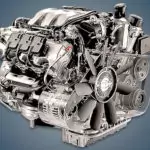
The 2.0-liter 16-valve Chrysler ECC or 420A engine was produced from 1994 to 2005 and was installed on many popular concern models such as Neon, Avenger, Sebring, PT Cruiser. There were several versions of this motor, which were very different from each other.
Neon family: EBD, ECC, ECH, EDT, EDZ, EDV, ECB.
Specifications
| Production years | 1994-2005 |
| Displacement, cc | 1996 |
| Fuel system | injector |
| Power output, hp | 140 – 150 |
| Torque output, Nm | 175 – 185 |
| Cylinder block | cast iron R4 |
| Block head | aluminum 16v |
| Cylinder bore, mm | 87.5 |
| Piston stroke, mm | 83 |
| Compression ratio | 9.6 |
| Features | DOHC |
| Hydraulic lifters | yes |
| Timing drive | belt |
| Phase regulator | no |
| Turbocharging | no |
| Recommended engine oil | 5W-30 |
| Engine oil capacity, liter | 4.3 |
| Fuel type | petrol |
| Euro standards | EURO 3 |
| Fuel consumption, L/100 km (for Chrysler PT Cruiser 2003) — city — highway — combined |
13.1 7.9 9.8 |
| Engine lifespan, km | ~270 000 |
| Weight, kg | 150 |
The engine was installed on:
- Chrysler Neon 1 (SX) in 1994 – 1999, Neon 2 (PL) in 1999 – 2005;
- Chrysler Sebring 1 (JX) in 1995 – 2000, Sebring 2 (JR) in 2000 – 2003;
- Chrysler PT Cruiser 1 (PT) in 2000 – 2005;
- Dodge Avenger 1 Coupe (FJ) in 1994 – 2000;
- Dodge Neon 1 (SX) in 1994 – 1999;
- Eagle Talon 2 in 1995 – 1998;
- Mitsubishi Eclipse 2G in 1994 – 1999;
- Plymouth Neon 1 in 1994 – 1999.
Disadvantages of the ECC engine
- The main problem of the internal combustion engine of this line is considered to be overheating with a breakdown of the cylinder head gasket;
- So watch out for antifreeze leaks, pipes and a thermostat often crack here;
- We should not forget about the timing belt resource of 100,000 km, when the valve breaks, it bends;
- When using 92nd gasoline, the fuel filter and injectors quickly clog;
- On long runs, an oil burner and oil leaks from oil seals are often found here.
Frequently asked questions about the Chrysler ECC
How much power does the Chrysler ECC make?
The Chrysler ECC develops 140 - 150 hp and 175 - 185 Nm of torque.
How much oil does the Chrysler ECC take and which one?
Engine oil capacity: 4.3 liters. Recommended oil: 5W-30.
Does the Chrysler ECC have a timing belt or chain?
The Chrysler ECC uses a timing belt.
Is the Chrysler ECC turbocharged?
No, the Chrysler ECC is naturally aspirated.
Does the Chrysler ECC need valve clearance adjustment?
No, the Chrysler ECC has hydraulic lifters, so the valve clearances do not need to be adjusted.
How long does the Chrysler ECC last?
The typical lifespan of the Chrysler ECC is ~270 000 km with proper maintenance.
What is the fuel consumption of the Chrysler ECC?
Chrysler PT Cruiser 2003: city 13.1, highway 7.9, combined 9.8 L/100 km.
What cars was the Chrysler ECC installed on?
Chrysler Neon 1 (SX) in 1994 - 1999, Neon 2 (PL) in 1999 - 2005; Chrysler Sebring 1 (JX) in 1995 - 2000, Sebring 2 (JR) in 2000 - 2003; Chrysler PT Cruiser 1 (PT) in 2000 - 2005; Dodge Avenger 1 Coupe (FJ) in 1994 - 2000; Dodge Neon 1 (SX) in 1994 - 1999; Eagle Talon 2 in 1995 - 1998 and 2 more (see the full list above).
What are the common problems of the Chrysler ECC?
The main problem of the internal combustion engine of this line is considered to be overheating with a breakdown of the cylinder head gasket. So watch out for antifreeze leaks, pipes and a thermostat often crack here. All known problems.