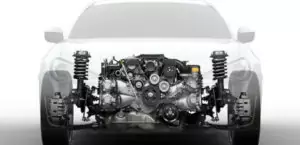

The 5.0-liter Toyota 2UR-GSE engine was introduced in 2007 as a unit for sports Lexus models. This motor is interesting with special Yamaha cylinder heads, titanium valves and a combined fuel injection system: a combination of direct D4-S and distributed MPI.
The UR family includes engines: 1UR‑FE, 1UR‑FSE, 2UR‑GSE, 2UR‑FSE, 3UR‑FE.
The engine was installed on:
- Lexus GS-F L10 since 2015;
- Lexus IS-F XE20 in 2007 – 2014;
- Lexus LC 500 URZ100 since 2016;
- Lexus RC-F XC10 since 2014.
Specifications
| Production years | since 2007 |
| Displacement, cc | 4969 |
| Fuel system | combined injection |
| Power output, hp | 416 – 477 |
| Torque output, Nm | 503 – 540 |
| Cylinder block | aluminum V8 |
| Block head | aluminum 32v |
| Cylinder bore, mm | 94 |
| Piston stroke, mm | 89.5 |
| Compression ratio | 11.8 – 12.3 |
| Features | ACIS and ETCS-i |
| Hydraulic lifters | yes |
| Timing drive | chain |
| Phase regulator | Dual VVT-i |
| Turbocharging | no |
| Recommended engine oil | 5W-30 |
| Engine oil capacity, liter | 8.6 |
| Fuel type | petrol |
| Euro standards | EURO 5 |
| Fuel consumption, L/100 km (for Lexus RC-F 2016) — city — highway — combined |
16.1 7.8 10.8 |
| Engine lifespan, km | ~300 000 |
| Weight, kg | 224 |
Disadvantages of the 2UR-GSE engine
- Owners complain about moderate oil consumption up to 0.5 liters per 1000 km;
- Some have already had to do decarbonization due to stuck rings;
- There are cases of breakdown of the pump and hydraulic chain tensioner at low mileage;
- In general, the reliability of this unit is at a very good level.


