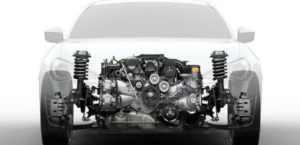

The 3.5-liter Toyota 1PZ diesel engine was produced by the company from 1990 to 1993 and was installed on the popular Land Cruiser 70 all-wheel drive SUV. This unit is also found on the Coaster passenger bus in the twentieth body.
In terms of its parameters, this naturally aspirated diesel is very simple and is unlikely to be a pleasant purchase for fans of high-speed driving. But the engine is specially designed for an SUV, and it performs its tasks perfectly.
In the technical characteristics of the power unit, it is worth paying special attention to the incredibly early torque. The engine works perfectly throughout the entire range of revolutions, pulls well at the bottom and does not cause problems with all-wheel drive transmissions.
Specifications
| Production years | 1990-1993 |
| Displacement, cc | 3469 |
| Fuel system | vortex chamber IDI |
| Power output, hp | 115 |
| Torque output, Nm | 230 |
| Cylinder block | cast iron R5 |
| Block head | cast iron 10v |
| Cylinder bore, mm | 94 |
| Piston stroke, mm | 100 |
| Compression ratio | 22.7 |
| Features | no |
| Hydraulic lifters | no |
| Timing drive | belt |
| Phase regulator | no |
| Turbocharging | no |
| Recommended engine oil | 10W-30 |
| Engine oil capacity, liter | 9.0 |
| Fuel type | diesel |
| Euro standards | EURO 1 |
| Fuel consumption, L/100 km (for Toyota Land Cruiser 70 1993) — city — highway — combined |
13.4 9.9 11.1 |
| Engine lifespan, km | ~500 000 |
| Weight, kg | 280 |
The engine was installed on:
- Toyota Land Cruiser 70 (J70) in 1990 – 1993;
- Toyota Coaster 2 (B20) in 1990 – 1993.
Disadvantages of the Toyota 1PZ engine
- Outstanding reliability unit does not have any typical problems;
- Approximately once every 100,000 km in the engine, the timing belt needs to be replaced;
- Since there are no hydraulic compensators, the thermal clearances of the valves must be adjusted.


