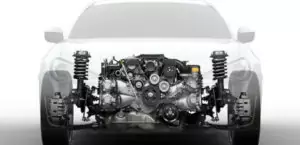

The 1.8-liter Opel X18XE engine was produced from 1995 to 2000 at a German plant and was installed only on two, but the most popular models of the Astra and Vectra concern. This power unit is essentially a smaller version of the famous X20XEV motor.
The X10 line includes: X12XE, X14XE, X16XEL, X16SZR, X18XE, X18XE1.
The engine was installed on:
- Opel Astra F (T92) in 1996 – 2000;
- Opel Vectra B (J96) in 1995 – 1999.
Specifications
| Production years | 1995-2000 |
| Displacement, cc | 1799 |
| Fuel system | distributed injection |
| Power output, hp | 115 |
| Torque output, Nm | 170 |
| Cylinder block | cast iron R4 |
| Block head | aluminum 16v |
| Cylinder bore, mm | 81.6 |
| Piston stroke, mm | 86 |
| Compression ratio | 10.8 |
| Features | VIS |
| Hydraulic lifters | yes |
| Timing drive | belt |
| Phase regulator | no |
| Turbocharging | no |
| Recommended engine oil | 5W-30 |
| Engine oil capacity, liter | 4.0 |
| Fuel type | petrol |
| Euro standards | EURO 2 |
| Fuel consumption, L/100 km (for Opel Vectra 1996) — city — highway — combined |
11.2 6.4 8.4 |
| Engine lifespan, km | ~350 000 |
| Weight, kg | 140 |
Disadvantages of the X18XE engine
- This engine is considered reliable, and all its problems are solved simply and inexpensively;
- To avoid floating speed, it is necessary to clean the idle speed control and the crankcase ventilation system;
- The exhaust manifold often cracks, it is pointless to weld, you have to buy a new one;
- Weak spot in the electrical part – camshaft position sensor;
- The timing belt runs no more than 60,000 kilometers, and when it breaks, the valves always bend.


